
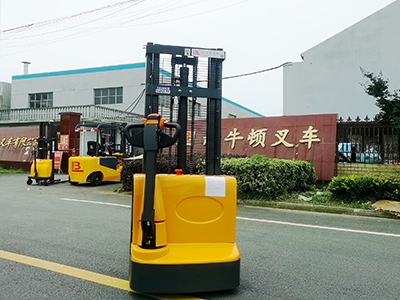
The common faults of walk behind forklift are: the speed of the drive wheel is significantly reduced or the drive motor is severely overloaded, the lifting is weak or unable to lift, the gantry is difficult to tilt automatically or the movement is not smooth enough, the oil pump pressure is insufficient or the speed is too slow, the circuit does not work properly Wait, electric forklift manufacturers tell us it's all some basic failure of forklift trucks.
Then let's talk about the reasons why the speed of the driving wheel of our walk behind forklift is significantly reduced or the driving motor is seriously overloaded: the battery voltage is too low or the contact resistance of the pile head is too large; the carbon deposition between the motor commutators causes the short circuit between the plates; the motor brake Improper adjustment causes the motor to run with braking; the gear box and bearing of the drive head lack lubrication or the base is blocked; the motor armature is short-circuited. Electric forklift manufacturers come to tell us the solution: check the battery terminal voltage or clean the pile head when the stacker is loaded; clean the commutator; adjust the brake clearance; check and clean and refill the lubricating oil to remove the jamming phenomenon; replace the new motor.
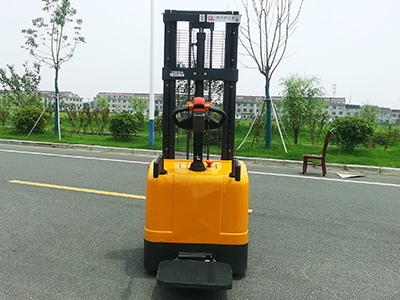
The walk behind forklift gantry is difficult to automatically tilt or the action is not smooth. Reasons: excessive wear of the tilting cylinder wall and sealing ring; failure of the valve stem spring in the reversing valve; piston stuck on the cylinder wall or bending of the piston rod; excessive scaling in the tilting cylinder or Seals are too tight. electric forklift manufacturers tell you that you can do the solution: replace the O-ring or cylinder; replace the qualified spring; replace the damaged parts; clean the adjustment.
In fact, vehicles like ours should be regularly maintained and repaired. Vehicle maintenance is very important. Don't let the vehicle stop moving and don't know what aspect of it is. The above only needs one or two of the facts. If it is still wrong, we should find professional personnel to check the fault for us, which also saves a lot of our own time.
-
 3-step Troubleshooting for Reduced Load Capacity of Manual Hydraulic TruckManual hydraulic pallet trucks often fail to lift or sink due to oil shortage, pressure leakage and air intake. Three-step inspection can quickly restore the equipment’s load-bearing performance.
Do you like ?0
Read more -
 What is Pedestrian Counterbalance Stacker & Basic Operating StepsPedestrian counterbalance stackers with rear weights fit narrow aisles with high cost performance. Standard operating procedures improve warehouse efficiency and ensure operational safety.
Do you like ?0
Read more -
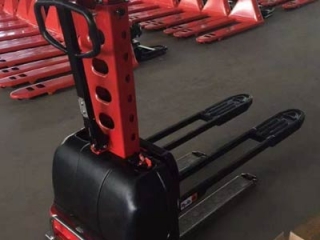 Battery Maintenance Guide for Onboard Electric Self-elevating TrucksFrequent power loss on self-loading stackers is mainly caused by improper battery maintenance. Standardize daily charging, inspection and storage to extend battery service life.
Do you like ?0
Read more -
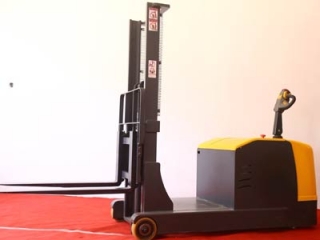 4 Dimensions Comparison: Reach Stacker and Counterbalance Stacker for WarehouseReach stackers and counterbalance stackers differ greatly in structure and application. Compare aisle width, load capacity, scenarios and maintenance costs for accurate warehouse selection.
Do you like ?0
Read more -
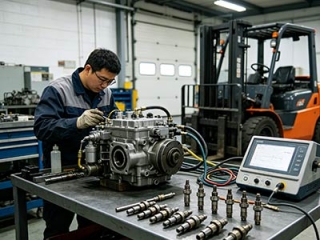 Causes of Black Smoke Failure of Outdoor Diesel Forklift & TroubleshootingBlack smoke from diesel forklift exhaust outdoors is mainly caused by insufficient fuel combustion. Distinguish temporary working conditions from persistent faults to reduce engine damage.
Do you like ?0
Read more -
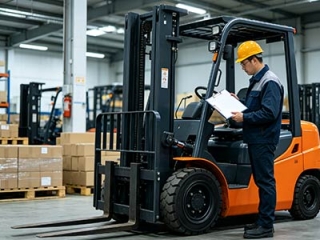 License Requirement for Warehouse Stand-on Counterbalance StackerWhether ride-on counterbalance stackers require operation certificates depends on equipment type. Operators need N1 forklift licenses for specified models to avoid regulatory risks.
Do you like ?0
Read more








